Giovinazzo: corteo storico e processione (Ita + Eng)

Giovinazzo: corteo storico e processione (Ita + Eng)

Amici di Sofia,
ecco alcune immagini e video del Corteo storico di Giovinazzo del 18 agosto 2018 giunto ormai alla sua 51esima edizione e della processione in onore della Madonna di Corsignano, la patrona di Giovinazzo.
Il folclore, la tradizione e la gioia festante hanno caratterizzato questo momento dedicato alla Vergine.
In uno dei video potrete notare anche la presenza del vescovo Domenico Cornacchia della diocesi comprendente Molfetta, Giovinazzo, Ruvo e Terlizzi.
Perdonate la qualità dei video ma sono stati realizzati con un umile smartphone.
Per vedere gli altri video, visitate e seguite il mio canale su YouTube.
Buona visione a tutti voi!

English version
Hi readers of Sofia,
here you can find some images and videos about the “Corteo storico” of Giovinazzo and the religious procession dedicated to the Madonna of Corsignano, protector of Giovinazzo.
In one of the videos, you can also see the bishop of Molfetta, Giovinazzo, Ruvo and Terlizzi: Domenico Cornacchia.
Those moments are an important event of the religious and social life of this little town of south Italy.
Please forgive the qualità of the videos: I realized them with my humble smartphone.
If you want to see the other videos, visit my YouTube Channel and subscribe.
Thank you 🙂


Questo slideshow richiede JavaScript.

Maria Domenica Depalo

Have you ever been in Giovinazzo?

Have you ever been in Giovinazzo?

Dear friends of Sofia,

today we will talk about a place where sun, sea and traditions combine to give birth to a dimension in which dreams and reality become an unique world.

We speak about Giovinazzo: marvellous city in the province of Bari, surrounded by the sea, here you can find witnesses of the Roman presence but also signs of its medieval story.  The population of this city, strictly connected to its Patron, grows considerably during summer, achieving twenty-five thousand people more or less between tourists and holiday workers.

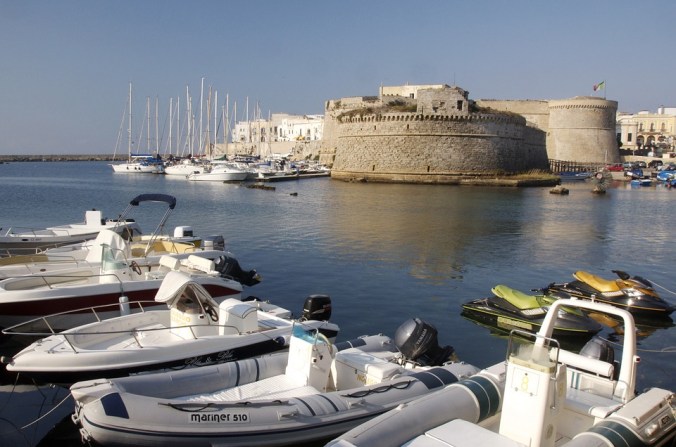
But let’s see some photos representing the port, the suggestive bridge and Piazza Vittorio Emanuele II:

banchina del porto

la banchina del porto di Giovinazzo foto di ©MariaDomenicaDepalo

passerella di Giovinazzo

passerella di Giovinazzo foto di ©MariaDomenicaDepalo

insta_20180812_174450.png

Scorcio di Piazza Vittorio Emanuele II foto di © MariaDomenicaDepalo

next page–>

Medieval week in Trani

Medieval week in Trani

Dear friends of Sofia,

as promised we are back. You have certainly noticed some small changes starting from the name of the blog. Don’t worry: the spirit is the same…
Actually it has been enriched by an increasing curiosity which includes and involves our daily reality. I don’t want to add anything more because week after week we will discover the changes.

So let’s begin with a jump in the past!

If you love the stories of ladies and knights, then the medieval week of Trani is the right event for you. From 9 to 12 August the “borgo antico” (the ancient town) of this wonderful city in the province of Bari will be at the center of this extraordinary event, which you shouldn’t lose.

Educational workshops for children, guided tours in the historic center and at the Castello Svevo will be the protagonists of a historical review that – we are sure – will attract not only the local citizens but also all the curious of the surrounding realities.

The Middle Age wasn’t just the age of obscurantism, of regression or of the Inquisition. On the contrary: its thousand years of life have seen the birth of important inventions and agricultural tools such as the plow or the water mill but also the clock without forgetting the miniatures of the amanuensis monks.

Even the history of thought has evolved. Just think of the patristic (Sant’Agostino), the Arabic philosophy (Averroes) and the scholasticism whose founding father was Anselmo d’Aosta, a Benedictine friar known for his demonstration of God existence.

Returning to the medieval week, it will be possible to participate in numerous initiatives that will allow adults and especially children to breathe the air and the climate of this era.

Don’t miss the opportunity to visit an unusual  medieval and Romanesque Trani but also to tread the streets of its historic center and to meet ladies, nobles and knights in their clothes.

Links:

https://www.pugliareporter.com/2018/07/31/puglia-grande-attesa-per-levento-a-trani-della-settimana-medioevale-dal-9-al-12-agosto-nel-borgo-antico/

https://www.puglia.com/la-settimana-medievale-trani/

https://it.wikipedia.org/wiki/Castello_svevo_(Trani)

https://it.wikipedia.org/wiki/Filosofia_medievale

https://www.cinquecosebelle.it/cinque-formidabili-invenzioni-del-medioevo/

Maria Domenica Depalo

Siamo in ferie!!! (ita + eng version)

Siamo in ferie!!! (ita + eng version)

Care piccole filosofe e cari piccoli filosofi,

oggi parleremo di noi e di ciò che ci fa stare bene. Presi dal vortice dei nostri mille impegni quotidiani, spesso infatti ci dimentichiamo di noi stessi. Urge pertanto staccare per rigenerarci e scoprire o riscoprire i nostri desideri.

Ma cos’è un desiderio? Il desiderio è l’espressione di una mancanza che sentiamo di dover colmare. Il filosofo Epicuro di Samo (341-271 A. C.) parlava di desideri naturali e necessari come mangiare, bere e dormire ma anche di desideri non necessari. I primi vanno assolutamente soddisfatti per il nostro benessere e la salute mentre i secondi non sempre possono essere realizzati. Questo provoca dolore e tristezza. (Per saperne di più date un’occhiata qui http://www.filosofico.net/epicuro.html).

Immaginate di dover solo lavorare e di non avere un momento di pace. Non fareste altro che immaginare palme, spiagge e libertà senza poterle raggiungere.

In virtù di questo e dell’influenza di Eraclito abbiamo deciso di andare in vacanza per un po’. La vacanza e le ferie in genere ci possono aiutare a guardare con più serenità in direzione dei nostri bisogni e sogni.

Non preoccupatevi però: torneremo presto con le nostre lezioni ed il blog ma anche con delle novità che – speriamo – possano piacervi.

Nel frattempo godetevi il mare, la montagna, il parco o il balcone di casa, la tv e persino lo smartphone (con moderazione!!!) ma soprattutto non perdete l’occasione di guardarvi intorno, di osservare le persone e ciò che vi circonda e di porvi delle domande, da bravi  indagatori.

Che ne pensate? Vi piace come programma o ne avete un altro? Fateci sapere.

A presto filosofi!!!!

Maria Domenica Depalo

next page–>

Festival del libro-Book festival

Festival del libro-Book festival

Dear little philosophers,

are you ready for an unusual lesson? We won’t talk about an ancient or modern philosopher but about an event concerning the books: the Salento Book Festival.

There are a lot of moments you can enjoy and you have time until July 22nd.

You’ll know important personalities of culture, journalism and literature such as Francesco Giorgino, Don Antonio Mazzi, the actor Gioele Dix but also Max Laudadio of the tv program“Striscia la notizia” . There will also be the actress and writer Chiara Francini, author of “My Mother must not know” and “Don’t talk with the full mouth”.

Chiara Francini

Ecco Chiara Francini fonte: Di Luirzy – Opera propria, Pubblico dominio, https://commons.wikimedia.org/w/index.php?curid=63975980

The towns of the festival  are Corigliano D’otranto, Galatina, Galatone, Gallipoli and Nardò. If I were you I would take advantage of this cultural initiative to visit all the incredible and marvellous Salento!

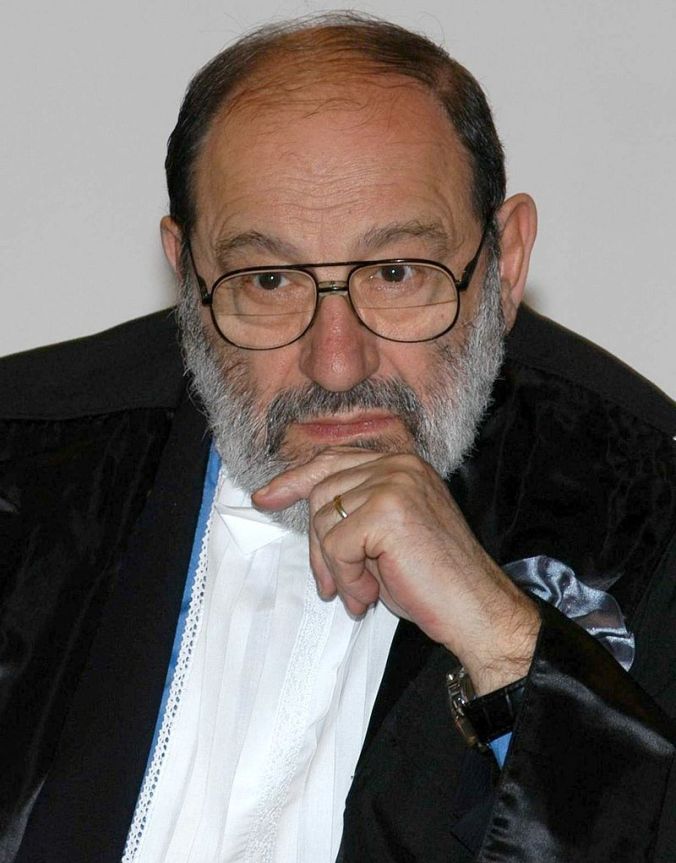
However, before leaving you, I’d like to ask you a question starting from the words of Umberto Eco, one of the most important and known writers, philologists and linguists of the Italian and international panorama. Ready?

“Who doesn’t read, at 70 years will have lived only one life: his own. Who reads will have lived 5000 years: he was there when Cain killed Abel, when Renzo married Lucia, when Leopardi admired the infinite… because reading is an immortality backwards”. (CIT. Umberto Eco)

Umberto Eco

Umberto Eco fonte: Di Università Reggio Calabria – Ufficio Stampa Università Mediterranea di Reggio Calabria, CC BY-SA 3.0, https://commons.wikimedia.org/w/index.php?curid=694892

What do you think? How important is reading for you? Which genres do you prefer?

Link:

https://freewordsmagazine.wordpress.com/2018/07/09/salento-book-festival/ https://www.festivalditalia.it/salento-book-festival/

Maria Domenica Depalo

Panta rei, kids!

Panta rei, kids!

Dear little philosophers,

last week we talked about turtles and Zeno of Elea. Do you remember what he said? Like his master Parmenides, he said that the movement doesn’t exist but someone else declared something different. This someone was Heraclitus of Ephesus, the philosopher of the panta rei (panta rei means everything flows).

Let’s read one of his statements:

“You cannot descend twice in the same river …”. What does this sentences mean?

What does a river usually do?  Look at its water: it flows continuously. Everything flows and changes time after time, minute after minute, always.

We change too:

“I look at a picture of when I was 16 and I look at one today. God, how I changed! Then I ask myself: but when did it happen? At night? While I was sleeping? “(from “Panta rei” by L. De Crescenzo, ed. Mondadori)

No one and nothing remain the same. To confirm it, just look at ourselves: every day we are different from what we were yesterday.

Guys, changes shouldn’t scare us. In fact we must consider them richness and embrace them with joy because it can be the right opportunity to improve more and reborn. Let’s not waste our personal panta rei!

Other links:

https://fuoritempofuoriluogo.wordpress.com/2017/11/20/panta-rei/

Maria Domenica Depalo


Achilles and the turtle

Achilles and the turtle

Welcome back to our new philosophy lesson!

Do you like turtles? Have you ever seen one close to you? You surely know that there are some of them who live and swim in the waters of the sea or of a lake and that there are others who spend their life on the mainland.

turtle

Eccone una di terra! Osservate il suo sguardo attento e consapevole. fonte: https://pixabay.com/it/tartaruga-scenario-natura-3340266/

sea turtle

Guardate: qui c’è una bella tartaruga di mare che nuota circondata da due pesciolini. Chissà dove sta andando? fonte: https://pixabay.com/it/tartaruga-subacquea-acqua-nuoto-691040/

Surely now you’re wondering why I’m talking about this animal and its habitats. The reason is very simple: the movement or better its slow moving.

Now I ask you a question: in a race on the mainland, between you and a turtle, who would win? You? Are you sure?

I am sorry but the philosopher Zeno of Elea who lived around 450 a.C. will surprise you with his answer.

Zeno was a careful and acute thinker and a pupil of another important philosopher, Parmenides. He said that there is no movement and that each of our acts is only an illusion. In short, for Parmenides, although we are moving, we are actually static.

Now look at the picture:

Achille and turtle

fonte: Di Daniele Pugliesi – Opera propria, CC BY-SA 3.0, https://commons.wikimedia.org/w/index.php?curid=27640179

The photo shows the “paradox of Achilles”, the most famous argument of our friend Zeno. Achilles, Greek hero and among the characters of the Iliad of Homer, one day  decided to compete in a racespeed with a turtle giving a few meters of advantage to the animal.

“Achilles runs […] ten meters and the tortoise runs a meter; Achilles runs that meter, the turtle runs a decimeter; Achilles runs that decimeter, the tortoise runs a centimeter; Achilles runs that centimeter, the tortoise runs a millimeter; Achilles runs that millimeter, the tortoise runs a tenth of a millimeter, and so on to infinity; so that Achilles can run forever without reaching it “. (from https://it.wikipedia.org/wiki/Paradosso_di_Achille_e_la_tartaruga)

As fast as he can run, the turtle will always keep its little advantageand so, even if Achilles runs faster than the turtle, he will never reach it. The space is divisible to infinity and Achilles, in his finitude, will never be able to cover the infinite of the finite space.

So my little philosphers, in a race not everything is as obvious as you might think. Expect always surprises!

At the next lesson and good philosophy!

Maria Domenica Depalo

A book for you: Il Signore è grande e non si può disegnare

A book for you: Il Signore è grande e non si può disegnare

Dear little philosophers,

Are you ready for this new lesson? Yes? So let’s start with some small questions: do you like drawing? What do you represent most? Do you have any favourite subjects?
But how many questions, you say!!! 😉 Don’t worry, there’s a reason and it’s a book, as we’ll find out in a bit.

Do you remember? Last week we set out a series of questions about the origin of the everything and we discovered what Thales, Anaximander and Anaximenes thought about this argument. (https://fuoritempofuoriluogo.wordpress.com/2018/06/12/lorigine-del-tutto/).

Speaking about the origin of everything, I remembered this masterpiece written by the journalist and author Gualtiero Pierce. With his television crew he has observed Jewish, Christians and Muslims children attending the confessional elementary schools of Rome. They have faced these great but delicate themes with their teachers and friends answering some questions. What do you say? Are you curious? But first of all the photo of the book:

copertina libroi

Ecco la copertina del libro foto di ©MariaDomenicaDepalo

But now try to answer some of the questions of the book and to write your answers in the comments. Ready?
1. How was God born? Where did God come from? Has he always existed?

2. Why do you think it is not possible to draw him?

3. Do you like words? Do you think they have a weight?

4. Who do you ask for forgiveness when you make mistakes?

5. What is the meaning of the word “Thank you “?

Are you curious enough? Then read the book but above all never stop asking questions.

The complete informations of this book: Il Signore è grande e non si può disegnare, Gualtiero Pierce, ed einuadi.

Maria Domenica Depalo

The origin of everything

The origin of everything

Dear little philosophers,

how are you all? Are you enjoying your summer holiday? I really hope you don’t spend all the day with your smartphone but also with other activities, like reading books, going out with your friends, walking but above all playing.

However, even if you are on holiday we will try to keep your attention awake through our little philosophy lessons. So: let’s start!

Today we’ll try to answer these questions: “Where do we come from and what is the origin of everything”?

Thales, Anaximander and Anaximene tried to find an answer but who are they? They were philosophers of nature.

Originally from Miletus, a Turkey city, they lived about 600 years before the birth of Jesus and they were really curious, especially about the beginning of everything so each of them has thought of a primordial cause, the arché.

Thales thought that the base of all was water: in fact, without this liquid there is no life. If we observe our person, we must consider that more than 80% of our body is made of it.

Anaximander  instead believed that at the origin of life was the apeiron, something unlimited or endless. Furthermore, only what is endless can give life to what has an end and limits, like us.

Anaximene’s arché was the air. Like Thales, he believed that “… there had to be a primordial matter at the bottom of all the changes that occur in nature”.

Who was right, on your opinion? What do you think about this theme? Where does everything we know come from? And we?

Before saying goodbye waiting for the next lesson, I suggest you the title of the book from which I took the sentence in bold and an interesting video. Good reading and good vision!

The book is “The world of Sofia” written by Jostein Gaarder, ed. Longanesi. And here is the video


Maria Domenica Depalo

Travel experiences

Travel experiences

Everyone of us has a place to visit and discover because every place, street or landscape is an expression of who we are and of our inner life.
In fact we could talk about a philosophy of travelling as a way to explore known and unknown spaces but especially ourselves.

It isn’t necessary to go too far or distant. You can move from your town to the nearest and make your travel: the one you need.

The contact with different people, cultures, languages, dresses and food could be read as an incredible instrument not only to  learn  more about what surrounds us but, at the same time, to evolve and  improve.

There are many ways to travel around the world but the first one is thanks to imagination.

Through it, we approach in a first, personal and unique way with people, colours, tastes and new places creating situations and moments we hope to realize.

What do you really see when you cross new roads or see new horizonts? What happens to your life?

Share with us your ideal travel or describe a place you visit often and know. If you want you can publish a photo.

I will publish the first.

Thank  you.

scorcio di Giovinazzo

Scorcio di Giovinazzo foto di ©MariaDomenicaDepalo


Maria Domenica Depalo